Disc Herniation Treatment in West Palm Beach & Jupiter, FL
Disc herniation can cause significant back pain, leg pain, numbness, tingling, or weakness when a damaged spinal disc places pressure on nearby nerves. For patients in West Palm Beach, Jupiter, Palm Beach County, and throughout South Florida, Dr. Zachary Grabel provides specialized evaluation and treatment for herniated discs and related spinal conditions at the renowned HSS facilities. He uses a comprehensive approach to determine whether nonsurgical care or spine surgery is appropriate.
An accurate diagnosis is essential because symptoms from a herniated disc can overlap with other spinal conditions. Dr. Grabel evaluates the location and severity of disc herniation, neurological symptoms, imaging findings, and individual treatment goals to develop a personalized plan of care.
Disc Anatomy
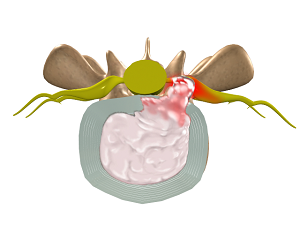
Disc herniation is one of the common causes of back pain. The intervertebral discs are flat and round, present between the vertebrae and act as shock absorbers when you walk or run. There is a soft, gelatinous material in the centre (nucleus pulposus) that is encased in strong elastic tissue to form a ring around it called annulus fibrosus.
What is a Disc Herniation?
Disc herniation is a condition where the central nucleus pushes through the outer edge of the disc, causing a bulge that compresses the spinal nerves.
Causes of Disc Herniation
Ageing, injury or trauma may cause the annulus fibrosus to tear, resulting in protrusion of the nucleus pulposus. This may compress the spinal nerves and/or spinal canal. The bulging disc may even break open, releasing the gelatinous material, which is a chemical irritant, causing inflammation of the spinal nerves.
Obesity, sedentary lifestyle and smoking increase the risk of lumbar disc herniation.
Symptoms of Disc Herniation
The symptoms of lumbar disc herniation include:
- Mild to intense back pain, making it difficult to bend
- Numbness and weakness in the leg or foot leading to the sensation of tingling (pins and needles)
- Leg and/or feet pain making it difficult to walk or stand
- In rare cases, loss of bowel and bladder function (cauda equine syndrome), requiring immediate medical attention
Diagnosis of Disc Herniation
The diagnosis of disc herniation includes a thorough review of your medical history and a physical and neurological examination. Neurological examination is performed to indicate any neurological injury and involves the evaluation of reflexes and muscle weakness by various tests. To confirm the diagnosis, your doctor may order an MRI to evaluate changes in the disc and spinal nerves.
Treatment of Disc Herniation
Non-surgical Treatment of disc Herniation
Non-surgical treatment is preferred over surgery and includes rest, activity modification, and pain medication, which include non-steroidal anti-inflammatory drugs, muscle relaxants, and epidural analgesic injections. Back braces are recommended for a few days to keep the lower back still and reduce mechanical pain due to movement. Physical therapy or acupuncture may be helpful in some cases.
Surgery for disc Herniation
Surgery is considered in cases with significant leg pain, muscle weakness, and numbness that is unresolved after conservative treatment measures. Urgent surgery may be required if neurologic dysfunction or cauda equine syndrome occurs.
Microdiscectomy is the most commonly used surgical procedure for lumbar disc herniation. It involves the removal of part of the herniated disc causing nerve compression. It is a comparatively safe procedure, but some of the risks include infection, nerve damage, dural leak, or hematoma. Most patients undergoing surgery find significant respite in pain after the surgery.
Why Choose Dr. Grabel for Disc Herniation
Dr. Zachary Grabel is a board-certified, fellowship-trained spine surgeon practicing in West Palm Beach and Jupiter, Florida. He completed a combined orthopedic and neurosurgical spine fellowship at Cleveland Clinic, providing advanced training in the diagnosis and surgical treatment of conditions affecting the cervical, thoracic, and lumbar spine. His experience includes treating herniated discs, radiculopathy, spinal stenosis, myelopathy, and other degenerative spine conditions.
Dr. Grabel offers both nonsurgical and surgical approaches based on each patient's condition. When surgery is necessary, his expertise includes minimally invasive spine procedures and microdiscectomy, which may be used to remove herniated disc material that is compressing a spinal nerve. His affiliation with Hospital for Special Surgery (HSS), along with his involvement in spine research, supports an evidence-informed approach focused on appropriate treatment and patient outcomes.
Disc Herniation FAQs
FAQs
What is a herniated disc?
A herniated disc occurs when the soft inner material of an intervertebral disc pushes through a weakened or damaged portion of its outer layer. The herniated material can irritate or compress nearby spinal nerves, causing pain and neurological symptoms.
What are the symptoms of a herniated disc?
Symptoms depend on the location of the herniation. A lumbar herniated disc may cause lower back pain, pain traveling into the buttock or leg, numbness, tingling, or weakness in the leg or foot. Cervical disc herniation may cause neck pain and symptoms extending into the shoulder, arm, or hand.
How is a disc herniation diagnosed?
Diagnosis typically involves reviewing your medical history and symptoms and performing a physical and neurological examination. An MRI may be recommended to provide detailed images of the discs, spinal nerves, and surrounding structures and help determine whether a herniated disc is causing nerve compression.
Can a herniated disc heal without surgery?
Many herniated discs can be managed without surgery. Treatment may include activity modification, medications, physical therapy, and other conservative measures. The appropriate approach depends on the severity of symptoms and whether there is significant nerve or spinal cord involvement.
When is surgery recommended for a herniated disc?
Surgery may be considered when significant pain, numbness, or weakness continues despite appropriate nonsurgical treatment or when there is substantial nerve compression. Urgent evaluation is necessary when a patient develops symptoms suggesting serious neurological dysfunction, including bowel or bladder changes.
What is a microdiscectomy?
A microdiscectomy is a spine surgery used to remove the portion of a herniated disc that is compressing a spinal nerve. By relieving pressure on the nerve, the procedure can help reduce radiating pain and other nerve-related symptoms in appropriately selected patients.
Expert Disc Herniation Care in West Palm Beach & Jupiter, FL
If a herniated disc is causing back pain, sciatica, numbness, tingling, or weakness, an evaluation by an experienced spine specialist can help determine the cause and appropriate treatment. Dr. Zachary Grabel provides comprehensive disc herniation care for patients in West Palm Beach, Jupiter, Palm Beach County, and communities throughout South Florida.
Schedule a consultation with Dr. Grabel to discuss your symptoms and treatment options. Whether your condition may improve with conservative care or requires a procedure such as microdiscectomy, Dr. Grabel can help you understand your diagnosis and make an informed decision about your spine care.
For more information about our services or to schedule an appointment, call us at or click here to request an appointment online. We'll respond to you as soon as possible.