
Radiculopathy Treatment in West Palm Beach & Jupiter, FL
Expert Care for Pinched Nerves, Radiculopathy & Sciatica
Neck or back pain that radiates into your arm or leg may be a sign of radiculopathy, which occurs when a spinal nerve root becomes compressed or irritated. Dr. Zachary J. Grabel, a fellowship-trained spine surgeon practicing at HSS Florida, provides comprehensive evaluation and treatment for radiculopathy affecting the cervical, thoracic, and lumbar spine.
Serving patients in West Palm Beach, Jupiter, and throughout South Florida, Dr. Grabel treats the underlying causes of nerve compression, including herniated discs, spinal stenosis, bone spurs, and degenerative spine conditions. Treatment may include nonsurgical care, injections, or advanced spine surgery when appropriate, with an individualized approach focused on relieving nerve compression and restoring function.
Spinal Cord Anatomy
The spinal cord is a long, delicate structure that carries messages between the brain and the rest of the body. It extends from the brain through the spinal canal, while spinal nerve roots branch off from the spinal cord and exit between the vertebrae. The spinal cord and nerve roots are protected by the bones of the vertebral column.
What Is Radiculopathy?
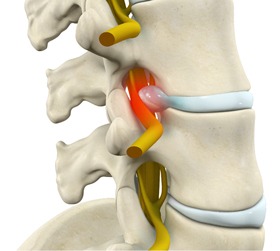
Certain conditions or mechanical compression of the spinal nerve roots can cause radiculopathy.
Radiculopathy occurs when a nerve root in the spine becomes compressed or irritated, resulting in pain, numbness, tingling, or weakness along the path of the affected nerve. It is sometimes referred to as a pinched nerve and, when it involves certain nerves in the lower back, may cause sciatica.
Radiculopathy most commonly affects the neck and lower back, although it can occur at other levels of the spine.
Causes of Radiculopathy
Spinal nerve roots can become compressed when the space around them becomes narrowed. This may occur due to:
- Herniation or bulging of a spinal disc
- Bone spurs associated with osteoarthritis and degenerative changes
- Thickening of surrounding ligaments
- Spinal stenosis
- Spondylolisthesis or other changes affecting spinal alignment
- Spinal deformity, including scoliosis
- Tumors or infection
- Inflammation resulting from degeneration or trauma
Signs and Symptoms of Radiculopathy
Pain, numbness, tingling, and weakness are common symptoms of radiculopathy. Pain may occur near the affected area of the spine or radiate along the path of the compressed nerve into an arm or leg.
The location of symptoms depends on which nerve root is affected. Cervical radiculopathy may cause symptoms in the neck, shoulder, arm, or hand, while lumbar radiculopathy may cause symptoms in the lower back, buttock, hip, or leg.
Some patients may also experience increased sensitivity, muscle weakness, or changes in reflexes associated with nerve compression.
Diagnosis of Radiculopathy
Your doctor will begin by reviewing your medical history and symptoms and performing a physical examination. The examination may assess sensation, muscle strength, reflexes, range of motion, and other neurological function to help identify the affected nerve.
Additional diagnostic testing may include:
- X-rays to evaluate spinal alignment, degenerative changes, trauma, and other abnormalities
- MRI or CT scans to evaluate the discs, nerves, spinal canal, and other structures and identify potential areas of nerve compression
- Electromyography (EMG) and nerve conduction studies to evaluate nerve and muscle function when needed
Treatment of Radiculopathy
Treatment depends on the underlying cause, severity of symptoms, and overall health and goals of the patient. Many patients can initially be treated with nonsurgical approaches, including physical therapy, medications, activity modification, and interventional treatments such as epidural steroid injections.
An epidural steroid injection may be used to reduce inflammation around an irritated spinal nerve and is typically performed using imaging guidance.
If symptoms persist despite appropriate nonsurgical treatment, or if significant nerve compression or neurological problems are present, surgical treatment may be recommended.
Surgery to Treat Radiculopathy
When surgery is appropriate, the goal is generally to relieve pressure on the affected nerve root. Depending on the underlying cause and location of the compression, surgery may involve removing a portion of a herniated disc or bone to create more space for the nerve. Spinal fusion may also be recommended when additional stabilization of the spine is needed.
The specific procedure depends on the location and cause of nerve compression and may include minimally invasive or other advanced surgical techniques.
Why Choose Dr. Grabel for Radiculopathy Treatment in West Palm Beach & Jupiter?
Dr. Zachary J. Grabel is a fellowship-trained spine surgeon at HSS Florida, providing comprehensive care for radiculopathy and other conditions affecting the cervical, thoracic, and lumbar spine. He completed a combined orthopaedic and neurosurgical spine fellowship at Cleveland Clinic, receiving training in both orthopaedic and neurosurgical approaches to spine surgery. His expertise includes radiculopathy, disc herniation, spinal stenosis, degenerative spine conditions, and other causes of nerve compression.
Dr. Grabel takes an individualized approach to treatment, considering the underlying cause and location of nerve compression, the severity of symptoms, and each patient's needs and goals. When surgery is appropriate, he offers procedures including decompression, microdiscectomy, spinal fusion, artificial disc replacement, and minimally invasive spine surgery. He sees patients at HSS Florida in West Palm Beach and Jupiter, providing specialized spine care to patients throughout South Florida.
Radiculopathy FAQs
FAQs
What is radiculopathy?
Radiculopathy occurs when a spinal nerve root becomes compressed or irritated, causing symptoms such as pain, numbness, tingling, or weakness that can travel from the spine into an arm or leg. It is commonly referred to as a pinched nerve.
What causes radiculopathy?
Common causes include herniated discs, spinal stenosis, bone spurs, degenerative changes, and spondylolisthesis. Less common causes can include spinal tumors, infection, or other conditions affecting the spine.
What is the difference between cervical and lumbar radiculopathy?
Cervical radiculopathy involves a compressed nerve root in the neck and can cause symptoms extending into the shoulder, arm, or hand. Lumbar radiculopathy involves the lower back and can cause symptoms extending into the hip, buttock, or leg. Lumbar radiculopathy affecting the sciatic nerve is commonly called sciatica.
How is radiculopathy diagnosed?
Diagnosis typically begins with a medical history and physical examination to evaluate pain, sensation, muscle strength, and reflexes. Depending on the suspected cause, imaging such as MRI or CT scans and, in some cases, nerve conduction studies or electromyography may be recommended.
Can radiculopathy be treated without surgery?
Yes. Many patients can initially be treated with nonsurgical approaches such as physical therapy, medications, activity modification, and epidural steroid injections. If symptoms persist or there is significant nerve compression or neurological dysfunction, surgery may be considered.
When is surgery recommended for radiculopathy?
Surgery may be recommended when symptoms do not improve with appropriate nonsurgical treatment, when nerve compression is significant, or when progressive weakness or other neurological problems develop. The specific procedure depends on the cause and location of the compression.
Expert Radiculopathy & Spine Care in South Florida
Find Relief From a Pinched Nerve
Persistent neck or back pain, numbness, tingling, or weakness may be signs of spinal nerve compression. Dr. Zachary J. Grabel provides comprehensive radiculopathy and spine care in West Palm Beach and Jupiter, FL, helping patients understand the cause of their symptoms and determine whether nonsurgical treatment or advanced spine surgery is appropriate.
Schedule a consultation with Dr. Grabel to discuss your spine condition and treatment options.
For more information about our services or to schedule an appointment, call us at or click here to request an appointment online. We'll respond to you as soon as possible.