
Spondylolysis Treatment in West Palm Beach & Jupiter, FL
Spondylolysis is a stress injury affecting a portion of the vertebra, most often in the lower back. It can cause persistent low back pain and is particularly associated with repetitive spinal stress in young athletes participating in sports such as gymnastics, football, and weightlifting. For patients and families in West Palm Beach, Jupiter, Palm Beach County, and throughout South Florida, Dr. Zachary Grabel provides specialized evaluation and treatment for spondylolysis and related spinal conditions.
Early evaluation can help determine the extent of the stress injury and whether the vertebra remains stable. Dr. Grabel assesses symptoms, physical findings, activity history, and imaging to develop an individualized treatment plan focused on pain relief, spinal stability, and a safe return to appropriate activities.
What is Spondylolysis?
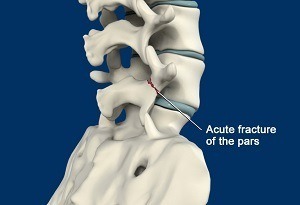
Spondylolysis is a stress fracture in the vertebra that may progress into spondylolisthesis, a condition where the vertebra gets displaced from the spinal column. Spondylolysis is the cause of frequent low back pain in children. It is more common among children and teenagers who participate actively in sports such as football, weightlifting, and gymnastics.
Causes of Spondylolysis
Spondylolysis occurs because of a defect or stress fracture in the pars interarticularis, the part of the lumbar spine joining the upper and lower joints. Genetic factors may play a role. Children born with thin vertebrae are prone to vertebral stress fractures. Apart from this, repetitive trauma to the lower back area that occurs during sports and other activities can cause weakness of the pars interarticularis, resulting in spondylolysis.
Symptoms of Spondylolysis
Although initially, your child may not have any symptoms, lower back pain is apparent during their teenage growth spurt period. The pain worsens with vigorous physical activities and exercises. At times, the pain may feel like a muscle strain.
Risk Factors for Spondylolysis
The risk factors for developing spondylolysis include:
- Family history of back problems
- Repetitive trauma to the lower back
- Increased lordosis (swayback)
- Incomplete development of the spinal cord (spina bifida occulta)
- Participation in sports such as football, gymnastics and weight lifting that require constant overstretching of the spine
Complications of Spondylolysis
Untreated spondylolysis may lead to further complications such as:
- Spondylolisthesis
- Limited mobility and inactivity
- Weight gain because of inactivity
- Loss of bone density
- Loss of muscle strength
- Loss of flexibility
- Permanent nerve damage
- Chronic back pain
- Numbness, tingling or weakness in the legs
- Nerve compression causing problems with bowel or bladder control
Diagnosis of Spondylolysis
Your surgeon diagnoses spondylolysis by reviewing your child’s family and medical history, performing a thorough physical examination and ordering imaging tests such as X-ray, CT scan or MRI scan.
Treatment of Spondylolysis
The primary treatment for spondylolysis is usually conservative. The goal of the conservative treatment is to reduce the pain, allow the fracture to heal and improve function. Conservative treatment options include:
- Rest: Adequate rest should be taken and strenuous exercises should be avoided until the symptoms subside.
- Medications: Non-steroidal anti-inflammatory drugs (NSAIDs) may be prescribed to reduce pain and inflammation. If NSAIDs do not provide relief, epidural steroid injections may be administered to the spine to reduce pain, numbness, and tingling in the legs.
- Physical therapy: An exercise program helps to strengthen the abdominal and back muscles, improve flexibility and increase range of motion of the lower back.
- Use of braces: In severe cases of spondylolysis, a brace or back support may be used to stabilize the lower back during fracture healing.
Surgery is usually required if spondylolysis progressed into spondylolisthesis. The goal of the surgery is to remove any abnormal bone compressing a nerve and to stabilize the spine.
A decompressive laminectomy and spinal fusion is a procedure in which a portion of the bone or lamina imparting pressure on the nerves is removed. A surgical incision is made in your back, and a part of the bone and thickened tissue pressing the spinal nerves is removed. This allows more space for the nerves thus relieving pain and pressure.
This procedure makes the spine unstable; therefore, spinal fusion is performed to stabilize the spine. Spinal fusion is the procedure of joining two adjacent vertebrae. During the procedure, a piece of bone removed from elsewhere in the body or donated from a bone bank is transplanted between the adjacent vertebrae. As healing occurs, the transplanted graft fuses with the vertebrae to stimulate the growth of a solid mass of bone, which helps to stabilize the spine. In some cases, metal implants such as rods, hooks, wires, plates or screws are used to hold the vertebrae firm until the new bone grows between them.
Prevention of Spondylolysis
Although spondylolysis is not completely preventable, certain factors can reduce the risk of developing the condition:
- Maintaining a healthy weight will reduce stress on the lower back.
- Core exercises to keep the abdominal and back muscles strong will help to support the lower back.
- Eating a well-balanced diet will keep your bones strong.
Why Choose Dr. Grabel for Spondylolysis
Dr. Zachary Grabel is a board-certified, fellowship-trained spine surgeon providing specialized care in West Palm Beach and Jupiter, Florida. He completed a combined orthopedic and neurosurgical spine fellowship at Cleveland Clinic, giving him advanced training in the evaluation and treatment of conditions affecting the cervical, thoracic, and lumbar spine. His expertise includes spondylolysis, spondylolisthesis, spinal deformities, and other conditions that can affect spinal stability.
Dr. Grabel takes a comprehensive approach to spondylolysis, considering the location and severity of the stress injury, symptoms, spinal alignment, neurological findings, and activity goals. Most cases can initially be managed with appropriate nonsurgical care, while surgery may be considered when a stress injury progresses to significant vertebral instability or persistent symptoms. His affiliation with Hospital for Special Surgery (HSS) and involvement in spine research support an evidence-informed approach to complex spine conditions.
Spondylolysis FAQs
FAQs
What is spondylolysis?
Spondylolysis is a stress fracture or defect in a portion of a vertebra called the pars interarticularis. It most commonly affects the lower back and can develop from repetitive stress on the spine.
Who is at risk for spondylolysis?
Spondylolysis is commonly seen in children and adolescents who participate in sports involving repeated extension or twisting of the lower back. Gymnastics, football, and weightlifting are examples of activities that can place repetitive stress on the spine. Genetic and structural factors may also contribute.
What are the symptoms of spondylolysis?
Some people with spondylolysis have no symptoms. When symptoms occur, the most common is lower back pain that may become worse with physical activity or movements that place stress on the lower back. Persistent or worsening pain should be evaluated by a qualified specialist.
How is spondylolysis diagnosed?
Diagnosis typically involves a review of medical and activity history, physical examination, and imaging. Depending on the suspected injury, X-rays, CT scans, or MRI may be used to evaluate the vertebra and surrounding spinal structures.
Can spondylolysis heal without surgery?
Many cases are initially treated without surgery. Treatment may include temporarily avoiding activities that aggravate symptoms, medications when appropriate, physical therapy, and sometimes bracing. The goal is to reduce symptoms, protect the injured area, and restore strength and mobility.
Can spondylolysis lead to spondylolisthesis?
Yes. In some patients, a defect in the pars interarticularis can contribute to forward displacement of a vertebra, known as spondylolisthesis. Regular evaluation may be recommended when there is concern about progression or spinal instability.
Expert Spondylolysis Care in West Palm Beach & Jupiter, FL
Persistent low back pain, particularly in an active child or teenager, should not always be assumed to be a simple muscle strain. Dr. Zachary Grabel provides specialized spine care for patients with spondylolysis in West Palm Beach, Jupiter, Palm Beach County, and throughout South Florida, with treatment tailored to the severity of the condition and individual activity goals.
Schedule a consultation with Dr. Grabel to discuss persistent back pain, suspected spondylolysis, or an existing diagnosis. Whether nonsurgical treatment or further evaluation for spinal instability is appropriate, a comprehensive assessment can help determine the best path toward recovery and a safe return to activity.
For more information about our services or to schedule an appointment, call us at or click here to request an appointment online. We'll respond to you as soon as possible.