
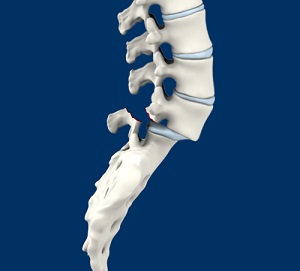
Spondylolisthesis Treatment in West Palm Beach & Jupiter, FL
Spondylolisthesis occurs when one vertebra shifts out of its normal position relative to another vertebra, potentially causing back pain, stiffness, leg symptoms, or nerve compression. It can develop because of degenerative changes, congenital abnormalities, repetitive stress, trauma, or other spinal conditions. For patients in West Palm Beach, Jupiter, Palm Beach County, and throughout South Florida, Dr. Zachary Grabel provides specialized evaluation and treatment for spondylolisthesis and related spinal disorders.
The severity and cause of vertebral displacement can vary considerably from patient to patient. Dr. Grabel evaluates spinal alignment, neurological symptoms, imaging findings, and the degree of vertebral slippage to determine whether conservative treatment or surgery may be appropriate.
What is Spondylolisthesis?
Spondylolisthesis is the displacement of the vertebral disc from the spinal column. Outward (forward) displacement is termed as anterolisthesis and inward (backward) displacement is termed as retrolisthesis. This condition is often preceded by spondylolysis, a degenerative condition of the vertebra.
Types of Spondylolisthesis
Based on the cause of displacement, five subtypes of spondylolisthesis are identified, they are:
- Dysplastic spondylolisthesis
- Isthmic spondylolisthesis
- Degenerative spondylolisthesis
- Traumatic spondylolisthesis
- Pathologic spondylolisthesis
Among the various subtypes of spondylolisthesis, the two most common forms observed are dysplastic spondylolisthesis (congenital condition caused because of abnormal bone formation of the facet part of the vertebra resulting) and isthmic spondylolisthesis (defect in the pars interarticularis part of the vertebra, which more common in athletes and gymnasts as they often suffer from overuse injuries).
Causes of Spondylolisthesis
The cause for spondylolisthesis is multifactorial; the common causes are overuse injuries of the spine, congenital abnormalities, trauma, bone disorders, and fractures.
Signs and Symptoms of Spondylolisthesis
The signs and symptoms that suggest spondylolisthesis include:
- Lower back pain
- Stiffness in the back and tightening of the hamstring muscles from spasms
- Pain in the thighs and buttocks
- Decreased range of motion of the lower back
- Pain and weakness of the legs or numbness because of nerve compression
- Loss of control on bowel or bladder function by severe nerve compression
- Increase in lordosis curve, also called swayback
- Kyphosis (round back)
Diagnosis of Spondylolisthesis
The treatment for spondylolisthesis is based on the diagnosis made by collecting your medical and family history, performing a physical examination and ordering radiographic scans. During the diagnosis, the severity of displacement is also assessed which is expressed as grade I to IV.
Treatment for Spondylolisthesis
In mild conditions and for symptomatic relief, conservative treatments including medications, bracing and physical therapy are recommended.
In severe cases, surgical correction with decompression laminectomy followed by spinal fusion is recommended. The procedure involves the removal of a portion of the vertebra compressing the nerves and other vertebrae, followed by the removal of a disc between the vertebrae and fusion of adjacent vertebrae. Fusion surgery is performed to confer stability to the spine. Following the surgery, your surgeon recommends physical therapy and rehabilitation programs to regain strength to the surrounding bones and muscles as well as to make you active soon.
Why Choose Dr. Grabel for Spondylolisthesis
Dr. Zachary Grabel is a board-certified, fellowship-trained spine surgeon providing care in West Palm Beach and Jupiter, Florida. He completed a combined orthopedic and neurosurgical spine fellowship at Cleveland Clinic, giving him advanced training in the diagnosis and treatment of cervical, thoracic, and lumbar spine conditions. His expertise includes spondylolisthesis, spinal stenosis, herniated discs, degenerative spine disease, and other conditions that can contribute to nerve compression and spinal instability.
Dr. Grabel takes an individualized approach to spondylolisthesis treatment, considering the degree of vertebral displacement, spinal stability, neurological involvement, symptoms, and each patient's treatment goals. When conservative care is insufficient or significant instability or nerve compression is present, surgical treatment may include decompression and spinal fusion or other advanced techniques appropriate for the patient's condition. His affiliation with Hospital for Special Surgery (HSS) and involvement in spine research support an evidence-informed approach to complex spine care.
Spondylolisthesis FAQs
FAQs
What is spondylolisthesis?
Spondylolisthesis is a condition in which one vertebra slips forward or backward relative to the vertebra below it. The displacement can alter spinal alignment and may cause nerve compression, particularly when associated with narrowing of the spinal canal or nerve openings.
What causes spondylolisthesis?
Spondylolisthesis can have several causes, including degenerative changes associated with aging, congenital abnormalities, defects in a portion of the vertebra called the pars interarticularis, repetitive stress, trauma, and certain bone disorders. The underlying cause determines the type of spondylolisthesis.
What are the symptoms of spondylolisthesis?
Symptoms may include lower back pain, stiffness, reduced range of motion, and pain extending into the buttocks or thighs. If displaced vertebrae compress nearby nerves, patients may also experience leg pain, numbness, tingling, or weakness.
How is spondylolisthesis diagnosed?
Diagnosis generally involves a review of your medical history and symptoms, a physical and neurological examination, and imaging studies. X-rays can show vertebral alignment and slippage, while additional imaging such as MRI or CT may be used to evaluate the nerves, discs, and other spinal structures.
Can spondylolisthesis be treated without surgery?
Yes. Many patients, particularly those with mild symptoms or stable vertebral displacement, may initially be treated with nonsurgical approaches. Depending on the condition, treatment can include activity modification, medications, physical therapy, and sometimes bracing.
When is surgery recommended for spondylolisthesis?
Surgery may be considered when significant pain or neurological symptoms persist despite appropriate nonsurgical treatment, or when there is substantial spinal instability or nerve compression. Depending on the patient's condition, surgery may involve decompression, spinal fusion, or a combination of procedures.
Expert Spondylolisthesis Care in West Palm Beach & Jupiter, FL
Spondylolisthesis can range from a mild spinal alignment problem to a condition that causes significant pain, nerve compression, or instability. Dr. Zachary Grabel provides specialized spondylolisthesis care for patients in West Palm Beach, Jupiter, Palm Beach County, and throughout South Florida, with treatment tailored to the cause and severity of each patient's condition.
Schedule a consultation with Dr. Grabel to discuss your spondylolisthesis symptoms, imaging findings, and treatment options. Whether you may benefit from conservative management or require decompression and spinal stabilization, a comprehensive evaluation can help determine the most appropriate approach for your spine.
For more information about our services or to schedule an appointment, call us at or click here to request an appointment online. We'll respond to you as soon as possible.