
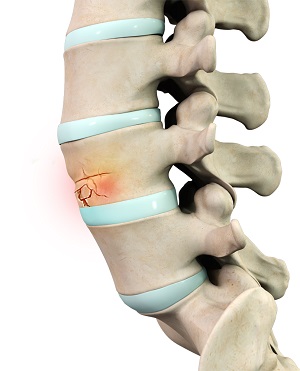
Spine Fracture Treatment in West Palm Beach & Jupiter, FL
Spinal fractures can result from traumatic injuries, falls, motor vehicle accidents, sports injuries, or weakened bones caused by osteoporosis. Depending on the location and severity of the fracture, patients may experience back or neck pain, numbness, weakness, balance problems, or other neurological symptoms. For patients in West Palm Beach, Jupiter, Palm Beach County, and throughout South Florida, Dr. Zachary Grabel provides specialized evaluation and treatment for spinal fractures and related spinal injuries.
Prompt evaluation is important after a suspected spinal fracture, particularly when neurological symptoms are present. Dr. Grabel assesses the location and stability of the fracture, neurological function, imaging findings, and overall health to determine whether bracing and nonsurgical care or surgical stabilization may be appropriate.
What are Fractures of the Spine?
A fracture of the spine is a break in the bone continuity of the spinal vertebrae or vertebral column. The spine extends from the neck to the lower back and consists of the vertebral bones which surround and protect the spinal cord. Damage to the spinal cord or spinal nerves can cause changes in sensation, strength, and other body functions.
Anatomy
The spine consists of 33 vertebral bones stacked one on top of the other with cushioning discs lying between each vertebra. There are 7 cervical or neck vertebrae, 12 thoracic or mid-back vertebrae, 5 lumbar or lower back vertebrae, 5 sacral bones, and 4 coccyx bones. The spine plays a key role in the smooth movement, stability, and protection of the delicate spinal cord, and gives symmetry and support to the body.
Causes
A spine fracture can cause damage to the vertebrae, disks between the vertebrae, ligaments of the spine or the spinal cord. It is often caused by:
- Motor vehicle accidents
- Falls
- High impact sports
- Shallow water diving
- Incidents of violence such as gunshot or stabbing
- Osteoporosis
Signs and Symptoms
Some of the common signs and symptoms of a spinal fracture include:
- Pressure, stiffness, and pain in the spinal area
- Tingling or numbness in the extremities
- Incoordination and weakness
- Difficulty with walking and balance
- Difficulty in breathing
- Abnormal posture of the neck or back
- Sexual dysfunction
- Abnormal reflexes or spasms
- Loss or change in sensation
- Loss of movement
- Loss of bladder or bowel control
Types of Spinal Fractures
Spinal fractures can be classified into various types based on the pattern and extent of the injury. Some of the common types of spine fractures include:
- Compression fracture: In this type of fracture, the front of the vertebra fractures and loses height; however, the back and the posterior part remains stable. Compression fractures commonly occur in patients with osteoporosis and is usually a stable fracture.
- Axial burst fracture: In this type of fracture, the vertebra loses height on both the front and backside. This fracture usually occurs as a result of a fall from a significant height. Depending on the stability of the fracture, this may require surgery.
- Chance fracture: In this fracture, the vertebra is literally pulled apart and is caused by a violent forward flexed injury. This often occurs in a car accident where the upper body is pulled forward while the pelvis is stabilised by a lap seatbelt.
- Fracture-dislocation: This type of fracture occurs due to high-energy trauma where the bone is broken and the ligaments are torn off displacing the vertebra. These fractures are usually unstable and cause serious spinal cord compression often requiring surgical correction.
Diagnosis
Your doctor will review your medical history, discuss your symptoms, and perform a thorough physical examination during which movement, muscle strength, and sensation are assessed. To investigate the spinal fracture, imaging tests such as X-rays, CT scans, or MRI scans may be ordered.
Treatment
Fractures of the spine are usually treated with braces and orthotics for 6 to 12 weeks with a gradual increase in activity. Braces and orthotics help to maintain spinal alignment, immobilize the spine during the healing process, and control pain by restricting movement.
Surgery is performed in cases of displacement of the fracture fragments, and significant injury to the adjoining ligaments, intervertebral discs or nerves. During the surgery, your doctor makes an incision in your front, side or back, re-aligns your bones with screws, rods or cages, and releases the compressed spinal cord or nerves. This is followed by stabilisation of the fracture. Surgery is followed by rehabilitation to alleviate pain and regain mobility.
Why Choose Dr. Grabel for Fractures of the Spine
Dr. Zachary Grabel is a board-certified, fellowship-trained spine surgeon providing specialized care in West Palm Beach and Jupiter, Florida. He completed a combined orthopedic and neurosurgical spine fellowship at Cleveland Clinic, giving him advanced training in treating injuries and conditions affecting the cervical, thoracic, and lumbar spine. His expertise includes spinal fractures, spinal deformities, degenerative conditions, and complex spine disorders.
Dr. Grabel takes a comprehensive approach to spinal fracture treatment, evaluating fracture stability, spinal alignment, neurological involvement, and the condition of the surrounding spinal structures. Depending on the injury, treatment may involve immobilization, bracing, observation, or surgery to decompress nerves or the spinal cord and stabilize the spine. His affiliation with Hospital for Special Surgery (HSS) and active involvement in spine research further support an evidence-informed approach to complex spinal injury care.
Fractures of the Spine FAQs
FAQs
What causes a spinal fracture?
Spinal fractures can result from high-energy trauma such as motor vehicle accidents, falls, sports injuries, and other traumatic events. They can also occur after relatively minor injuries in people with weakened bones, particularly those with osteoporosis.
What are the symptoms of a spinal fracture?
Symptoms vary depending on the location and severity of the fracture. Common symptoms include significant neck or back pain, stiffness, abnormal posture, difficulty walking, numbness, tingling, weakness, and changes in sensation. Severe spinal injuries may also affect bladder or bowel function.
What are the different types of spinal fractures?
Common spinal fracture patterns include compression fractures, burst fractures, Chance fractures, and fracture-dislocations. Some fractures are relatively stable, while others can be unstable and may place the spinal cord or nerves at risk.
How are spinal fractures diagnosed?
Diagnosis typically begins with a medical history and physical and neurological examination. X-rays may identify changes in the vertebrae, while CT scans can provide detailed information about the bones and fracture pattern. MRI may be used to evaluate the spinal cord, nerves, discs, ligaments, and other soft tissues.
Can a spinal fracture heal without surgery?
Some stable spinal fractures can be treated without surgery. Depending on the injury, treatment may include bracing, activity modification, pain management, and gradual rehabilitation. The appropriate treatment depends on fracture stability, alignment, neurological function, and the patient's overall condition.
When is surgery needed for a spinal fracture?
Surgery may be necessary when a fracture is unstable, significantly displaced, causes spinal deformity, or compresses the spinal cord or nerves. Surgical treatment may involve realigning and stabilizing the spine with instrumentation such as screws, rods, or cages, along with decompression when necessary.
Expert Spinal Fracture Care in West Palm Beach & Jupiter, FL
A spinal fracture requires careful evaluation to determine whether the injury is stable and whether the spinal cord or nerves are affected. Dr. Zachary Grabel provides specialized spine fracture care for patients in West Palm Beach, Jupiter, Palm Beach County, and throughout South Florida, with treatment tailored to the type and severity of each injury.
If you have sustained a spinal injury or have been diagnosed with a spinal fracture, schedule an evaluation with Dr. Grabel to discuss your diagnosis and treatment options. Whether your fracture can be managed with nonsurgical care or requires surgical stabilization, timely specialized spine care can help protect spinal function and support recovery.
For more information about our services or to schedule an appointment, call us at or click here to request an appointment online. We'll respond to you as soon as possible.