
Lateral Lumbar Interbody Fusion in West Palm Beach & Jupiter, FL
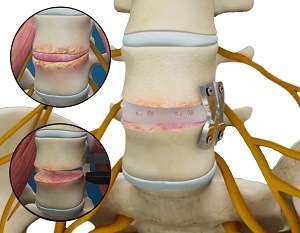
Persistent lower back or leg pain caused by degenerative disc disease, spinal deformity, stenosis, or spinal instability can make everyday activities difficult. Lateral lumbar interbody fusion (LLIF) is a minimally invasive lumbar fusion technique that approaches the spine from the side rather than through the front or back. Dr. Grabel provides individualized spine care for patients in West Palm Beach, Jupiter, Palm Beach County, and throughout South Florida, evaluating the underlying cause of symptoms and determining whether LLIF or another treatment approach is appropriate. When indicated, this technique can help restore disc height, improve spinal stability, and support fusion while limiting disruption to surrounding tissues.
What is Lateral Lumbar Interbody Fusion?
The back is made up of a number of small bones called vertebrae. Cushioning discs present between the vertebrae act as shock absorbers. The vertebral column allows the cylindrical bundle of nerve fibers called the spinal cord to pass through the entire column length and branch out to the various parts of the body. Any damage or deformity to the bones of the vertebral column or to the intervertebral discs can damage these nerves, leading to pain in the body part that the nerve supplies.
Lateral lumbar interbody fusion also known as extreme lateral (XLIF) or direct lateral interbody fusion (DLIF) is a minimally invasive spinal procedure performed to treat back and leg pain caused by degenerative discs and other problems within the vertebral column. Interbody fusion involves the fusing of the affected vertebrae found in the lumbar region (lower back). In lateral lumbar interbody fusion, your doctor will access the spine from incisions made in your side.
Indications of Lateral Lumbar Interbody Fusion
Lateral lumbar interbody fusion is indicated for:
- Degenerative disc disease: wearing out of intervertebral discs with age
- Scoliosis: abnormally curved spine
- Spinal stenosis: narrowing of the spinal canal
- Spondylolisthesis: slipping of the vertebra from their normal position
- Fractures
- Infections and
- Tumour
XLIF is not recommended in the following situations:
- When the displacement of the vertebrae in degenerative spondylolisthesis is greater than 50%
- Severe compression of a spinal nerve
- Presence of scarring from prior surgery or abscess
Advantages of Lateral Lumbar Interbody Fusion
The advantages of XLIF include:
- Minimally invasive procedure which requires less surgical time reducing your time under anesthesia.
- Less pain, scarring and blood loss as the procedure causes less damage to the adjacent tissues.
- Ensures early recovery and faster return to your normal activities.
Why Choose Dr. Grabel for Lateral Lumbar Interbody Fusion?
Selecting an experienced spine surgeon is important when considering lumbar fusion. Dr. Grabel provides comprehensive evaluation and personalized treatment planning for patients with complex lumbar spine conditions.
- Specialized spine expertise: Dr. Grabel evaluates and treats a broad range of degenerative, structural, and instability-related conditions affecting the lumbar spine.
- Personalized surgical planning: Your symptoms, imaging studies, anatomy, medical history, and treatment goals are considered when determining the most appropriate approach.
- Minimally invasive techniques when appropriate: LLIF may use smaller incisions and a lateral approach to access the affected disc space while limiting disruption to surrounding tissues.
- Focus on spinal stability: The procedure is designed to restore disc height and stabilize the affected spinal segment while promoting bone fusion.
- Advanced intraoperative guidance: Imaging and nerve-monitoring technologies may be used during appropriate procedures to help guide implant placement and protect nearby structures.
- Comprehensive recovery planning: Your postoperative care may include activity modifications, pain management, follow-up evaluations, and rehabilitation based on your individual needs.
- Patient-focused care: Dr. Grabel discusses the expected benefits, limitations, potential risks, and alternatives so you can make an informed decision about your spine treatment.
Lateral Lumbar Interbody Fusion FAQs
FAQs
What is lateral lumbar interbody fusion?
Lateral lumbar interbody fusion is a minimally invasive spinal fusion procedure that approaches the lumbar spine through the patient's side. The damaged disc is removed and replaced with an interbody implant, often containing bone graft material, to help restore disc height and encourage fusion between adjacent vertebrae.
What conditions can LLIF treat?
LLIF may be considered for conditions such as degenerative disc disease, certain cases of spondylolisthesis, scoliosis, spinal stenosis, fractures, and other conditions associated with lumbar instability or degeneration. Not every patient is a candidate, so a detailed evaluation is necessary.
What are the benefits of lateral lumbar interbody fusion?
Potential benefits include smaller incisions, less disruption to certain muscles and soft tissues, reduced blood loss, and a potentially faster recovery compared with some traditional approaches. Individual results vary depending on the underlying condition and surgical technique.
How is LLIF performed?
During LLIF, you are positioned on your side under general anesthesia. The surgeon uses imaging guidance to identify the affected disc, accesses the spine through the side, removes the damaged disc material, and places an interbody implant into the disc space. Bone graft material may be used to encourage fusion. Additional screws or other instrumentation may be recommended when greater stability is needed.
How long does recovery take after LLIF?
Recovery varies according to the number of spinal levels treated, the surgical approach, overall health, and other individual factors. Patients are generally encouraged to begin walking and gradually increase activity as directed. Your surgeon will provide specific instructions regarding lifting, exercise, work, and physical therapy.
Schedule a Lateral Lumbar Interbody Fusion Consultation in West Palm Beach & Jupiter, FL
If persistent back or leg pain is affecting your mobility and quality of life, a comprehensive spine evaluation can help identify the cause and determine appropriate treatment options. Dr. Grabel provides personalized spine care for patients in West Palm Beach, Jupiter, Palm Beach County, and throughout South Florida communities, including evaluation for minimally invasive lumbar fusion procedures such as lateral lumbar interbody fusion.
Contact Dr. Grabel today to schedule a consultation and learn whether lateral lumbar interbody fusion or another treatment option may be appropriate for your lumbar spine condition.
For more information about our services or to schedule an appointment, call us at or click here to request an appointment online. We'll respond to you as soon as possible.