
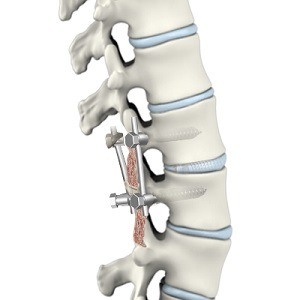
What is Lumbar Interbody Fusion?
Lumbar interbody fusion (LIF) surgery is a surgical technique that involves the removal of a damaged intervertebral disc and the insertion of a bone graft into the disc space created between the two adjoining vertebrae. Bone grafts promote healing and facilitate fusion. Screws and rods are used to stabilize the spine during the healing process.
Indications for Lumbar Interbody Fusion
Lumbar interbody fusion (LIF) surgery may be recommended for degenerative disc disease, spondylolisthesis, and disc herniation. The aim of the surgery is to alleviate back or leg pain and stabilize the spine.
Types of Lumbar Interbody Fusion
An interbody fusion can be performed with different approaches, which include:
Anterior lumbar interbody fusion (ALIF): In this technique, the spine is approached from the front by making an incision over the abdomen.
Posterior lumbar interbody fusion (PLIF): Your surgeon gains access to the spinal canal, disc and nerve roots from the back. In this procedure, the lamina is removed and the facet joints are trimmed to gain access to your spine.
Transforaminal lumbar interbody fusion (TLIF): In this technique, the spine is approached from the side. This allows your surgeon to access the front as well as the back of your spine.
Direct lateral interbody fusion (DLIF): In this approach, the spine is also approached from the side. Using a minimally invasive technique, the underlying soft tissues and the psoas muscle are gently separated to reach the intervertebral disc. As the spine is approached through the psoas muscle, DLIF is also known as the trans-psoas approach.
For more information about our services or to schedule an appointment, call us at or click here to request an appointment online. We'll respond to you as soon as possible.