Thoracic Laminectomy in West Palm Beach & Jupiter, FL
Advanced Surgical Care for Thoracic Disc Herniation, Spinal Cord Compression & Mid-Back Conditions
Thoracic spine conditions can cause persistent mid-back pain, chest or abdominal discomfort, numbness, weakness, and other symptoms when a herniated disc places pressure on the spinal cord or nearby nerves. When symptoms do not improve with appropriate nonsurgical treatment or neurological problems develop, surgical decompression may be considered. Dr. Zachary J. Grabel is a board-certified, fellowship-trained orthopedic spine surgeon providing advanced treatment for complex thoracic spine conditions throughout West Palm Beach, Jupiter, Palm Beach County, and South Florida.
Dr. Grabel provides individualized evaluation for patients with thoracic disc herniation and spinal cord compression. Depending on the location and severity of the disc herniation, surgical treatment may involve thoracic discectomy through an appropriate anterior or posterolateral approach. Treatment is carefully planned using the patient's symptoms, imaging findings, spinal anatomy, and overall health.
The Thoracic Spine
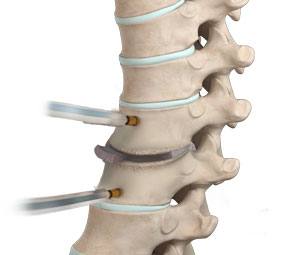
The human spine provides support to the body allowing you to stand upright, bend, and twist. The spine can be broadly divided into the cervical, thoracic, and lumbar spine. The thoracic spine lies in the mid-back region between the neck and lower back and is protected by the rib cage. It consists of 12 vertebral bones with intervening intervertebral discs. The intervertebral discs act as shock absorbers and protect the spine from strong forces of movement during activities such as jumping, running, and lifting.
Disc Herniation in the Thoracic Spine
Wear and tear can occur in the disc with age and may cause the soft spongy tissue in the center of the disc to squeeze (herniate) from a tear on the side of the disc. Disc herniation may also occur due to an injury such as during a car accident or a fall, a sudden and forceful twist of the mid-back or disease of the thoracic spine such as Scheuermann's disease.
The herniated disc protrudes into the hollow tube of the spinal column called the spinal canal and directly pushes against the spinal cord passing through the spinal column. This can injure the spinal cord. Herniated discs can also block blood flow from the one and only blood vessel going to the front of the spinal cord in the thoracic region of the spine causing nerve tissues in the spinal cord to die.
Symptoms of thoracic disc herniation vary depending on the position and size of the disc herniation; nerve irritation or nerve injury; and damage to the spinal cord. Symptoms may include mid-back pain; pain around the front of the chest that may mimic heart problems; groin pain, numbness, and weakness in the legs and arms. It may even affect bowel and bladder function.
Usually, thoracic disc herniation is treated conservatively with rest, back brace, medication, and physical therapy. Surgery is considered when long-term conservative treatment does not relieve pain or the condition is rapidly getting worse or is affecting the spinal cord.
What is Thoracic Discectomy?
The goal of surgery is to remove all or part of the herniated disc pressing on the nerve root or spinal cord and is called thoracic discectomy. It can be performed either through the anterior approach (front side) or posterolateral approach (behind and to the side).
Anterior approach: This approach usually involves open thoracotomy in which the herniated disc is accessed through the chest cavity. An alternative to open thoracotomy is Video-Assisted Thoracic Surgery (VATS). VATS is a minimally invasive surgery performed through several small incisions and involves the use of a thoracoscope, a surgical tool with a tiny camera.
The thoracoscope is inserted into the side of the thorax through a small incision to provide real images of the surgical area on a TV screen. These images guide the surgeon to remove the herniated disc using instruments inserted through other small incisions. VATS is minimally invasive and results in quicker recovery than open thoracotomy.
Posterolateral approach: This approach is also called costotransversectomy. The herniated disc is accessed through an incision on the back of the spine. A window through the bones that cover the herniated disc is created by removing a small part of the rib where it connects to the spine (Costo means rib) and transverse process (a small bone attached to the spine). The discectomy is then performed with small instruments.
Why Choose Dr. Zachary J. Grabel for Thoracic Laminectomy?
Dr. Zachary J. Grabel is a fellowship-trained orthopedic spine surgeon with advanced training in orthopedic and neurosurgical spine techniques. He provides comprehensive care for patients with complex conditions affecting the thoracic spine, spinal cord, and nerves.
Patients choose Dr. Grabel for his:
- Advanced spine training: Fellowship training in complex orthopedic and neurosurgical spine care.
- Expertise in thoracic spine conditions: Experience evaluating and treating conditions affecting the middle portion of the spine.
- Individualized treatment planning: Recommendations are based on symptoms, imaging, the location of spinal compression, and each patient's treatment goals.
- Comprehensive approach: Nonsurgical and surgical options are considered to determine the most appropriate treatment.
- Advanced surgical techniques: Appropriate patients may benefit from specialized approaches designed to safely access and decompress the thoracic spine.
- Focus on long-term recovery: Treatment and postoperative care are planned to support mobility, function, and quality of life.
Thoracic Laminectomy FAQs
FAQs
What is a thoracic laminectomy?
A thoracic laminectomy is a decompression procedure that removes part of the lamina, the bony structure forming the back of the spinal canal, to create additional space for the spinal cord and nerves. The procedure may be considered for certain causes of thoracic spinal cord compression.
Can a thoracic herniated disc cause serious symptoms?
Yes. A thoracic disc herniation can sometimes compress the spinal cord or nerves and cause mid-back pain, chest or abdominal pain, numbness, weakness, and changes in bowel or bladder function. New or worsening neurological symptoms should be evaluated promptly.
When is surgery recommended for a thoracic herniated disc?
Most thoracic disc herniations are initially treated with nonsurgical measures such as medication, activity modification, physical therapy, or bracing when appropriate. Surgery may be considered when symptoms persist despite conservative treatment, symptoms progress, or the spinal cord is significantly compressed.
Is thoracic discectomy the same as thoracic laminectomy?
No. A thoracic laminectomy involves removing part of the lamina to decompress the spinal canal. A thoracic discectomy involves removing all or part of a herniated disc that is compressing the spinal cord or nerves. Depending on the condition, these procedures may be performed together.
What approaches can be used for thoracic disc surgery?
The surgical approach depends on the location and characteristics of the disc herniation. Options may include an anterior approach through the chest or a posterolateral approach through the back and side of the spine. Minimally invasive techniques such as video-assisted thoracic surgery may be appropriate for selected patients.
Schedule a Thoracic Spine Consultation in West Palm Beach & Jupiter, FL
If mid-back pain, chest or abdominal discomfort, numbness, weakness, or other symptoms of a thoracic disc herniation are affecting your quality of life, Dr. Zachary J. Grabel offers advanced evaluation and surgical treatment for appropriately selected patients throughout West Palm Beach, Jupiter, Palm Beach County, and South Florida.
Contact our office today to schedule a consultation and learn whether thoracic laminectomy, thoracic discectomy, or another treatment option may be appropriate for your condition. Dr. Grabel can evaluate your symptoms and imaging findings and develop a personalized treatment plan focused on relieving spinal cord or nerve compression and supporting your recovery.
For more information about our services or to schedule an appointment, call us at or click here to request an appointment online. We'll respond to you as soon as possible.