
Expert Transforaminal Lumbar Interbody Fusion in West Palm Beach & Jupiter, FL
Transforaminal lumbar interbody fusion (TLIF) is a spinal fusion procedure used to stabilize the lumbar spine and address conditions such as degenerative disc disease, spondylolisthesis, and certain cases of spinal stenosis. For patients in West Palm Beach, Jupiter, Palm Beach County, and throughout South Florida, Dr. Grabel provides individualized evaluation and surgical planning for lumbar spine conditions that may require fusion. When TLIF is appropriate, treatment is designed to decompress affected nerves, restore spinal stability, and support fusion between the involved vertebrae.
What is Transforaminal Lumbar Interbody Fusion (TLIF)?
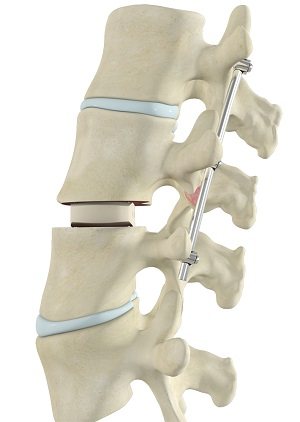
Transforaminal lumbar interbody fusion (TLIF) is a type of spinal fusion procedure in which bone graft is placed between the affected vertebrae in the lower back (lumbar) region through an incision on the patient’s back.
Indications for Transforaminal Lumbar Interbody Fusion (TLIF)
Based on your spinal condition, age, activity level, and medical history, your surgeon may recommend TLIF as a treatment option in the following spinal instability conditions:
- Degenerative disc disease (damaged disc)
- Spondylolisthesis (slippage of one vertebra on another)
- Spinal stenosis
The common symptoms associated with lumbar spinal instability are pain, numbness, and muscle weakness in the lower back, hips, and legs.
Why Choose Dr. Grabel for Transforaminal Lumbar Interbody Fusion?
When lumbar instability causes persistent pain, numbness, weakness, or difficulty with daily activities, choosing an experienced spine specialist is important. Dr. Grabel offers:
- Specialized lumbar spine expertise: Evaluation and treatment of conditions that may contribute to spinal instability and nerve compression.
- Individualized treatment planning: Your symptoms, medical history, physical examination, imaging, and activity goals are considered when developing a surgical plan.
- Comprehensive decompression: When necessary, bone, disc material, or other structures contributing to nerve compression can be addressed during the procedure.
- Focus on spinal stabilization: TLIF uses bone graft material and instrumentation such as screws and rods to stabilize the affected spinal segment while fusion develops.
- Modern surgical techniques: Surgical approaches are selected according to your anatomy and specific spinal condition.
- Personalized recovery support: Postoperative activity recommendations and rehabilitation guidance are tailored to your progress.
Transforaminal Lumbar Interbody Fusion FAQs
FAQs
What conditions can TLIF treat?
TLIF may be recommended for certain patients with degenerative disc disease, spondylolisthesis, spinal instability, and some cases of spinal stenosis. Your surgeon will determine whether fusion is appropriate based on your symptoms, imaging findings, and overall spinal health.
How is TLIF performed?
TLIF is performed through an incision in the back. The surgeon accesses the affected spinal segment, decompresses the nerve when necessary, removes the damaged disc, and places bone graft material in the disc space. Screws and rods may then be used to stabilize the vertebrae while fusion occurs.
Is TLIF a minimally invasive procedure?
TLIF can be performed using different surgical approaches depending on the patient's condition and the surgeon's treatment plan. In appropriate cases, minimally invasive techniques may use smaller incisions and specialized instruments to reduce disruption to surrounding tissues.
How long does recovery take after TLIF?
Recovery varies depending on the extent of surgery, your overall health, and how your spine heals. Many patients gradually return to routine activities over the weeks following surgery, but spinal fusion itself takes longer to become solid. Your surgeon will provide specific restrictions and rehabilitation recommendations.
Will TLIF relieve leg pain?
When leg symptoms are caused by compression or irritation of a spinal nerve, decompression performed as part of TLIF may help relieve pain, numbness, or weakness. The outcome depends on the underlying condition and the extent and duration of nerve compression.
Schedule a TLIF Consultation in West Palm Beach & Jupiter, FL
Persistent lower back or leg pain related to lumbar instability, degenerative disc disease, or spondylolisthesis can make everyday activities challenging. Dr. Grabel provides personalized evaluation and treatment planning for patients considering transforaminal lumbar interbody fusion in West Palm Beach, Jupiter, Palm Beach County, and throughout South Florida,
If conservative treatment has not provided adequate relief, schedule a consultation to discuss your symptoms, imaging findings, and treatment options. Dr. Grabel can help determine whether TLIF or another lumbar spine treatment may be appropriate for your condition and goals.
For more information about our services or to schedule an appointment, call us at or click here to request an appointment online. We'll respond to you as soon as possible.